You can help prevent the spread of Queensland Fruit Fly
Pest exclusion
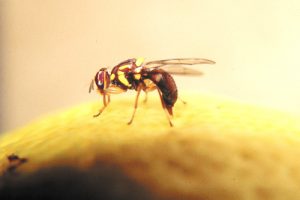
Fruit fly control is a community effort and requires vigilance. No single action will stop the spread of Queensland Fruit Fly, but instead an integrated management approach is essential.
Home gardeners and horticulture producers should combine management strategies to minimise the effects of fruit fly on the region such as:
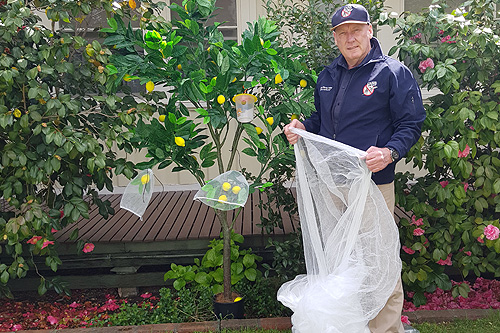
- Physical barriers creates an exclusion zone and provides an effective means to stop female fruit fly reaching fruit and vegetable.
- Netting, bags and sleeves may be used to create this exclusion and are available from your local farm supply, nursery or hardware retailer.
- UV stabilised netting which has a tight enough pattern to exclude fruit fly.
Garden hygiene
Good garden hygiene can be achieved by taking the following actions:
Remove unwanted fruit and vegetables
Pick your fruit as it ripens. Collect and destroy rotting or unwanted host produce, whether it is on the ground or on the plant, to reduce the risk of fruit fly maggots developing.
Destroy rotting or unwanted fruit and vegetables
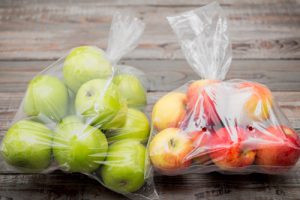
Unwanted host fruit can be destroyed by placing it in the freezer or microwave to kill maggots.
Fruit can also be destroyed by placing it in a sealed plastic bag and leaving it in the sun for 5-7 days before throwing it out. Only once the fruit or vegetable has been treated should it be discarded in your rubbish bin. Placing untreated fruit and vegetable in your rubbish or green bin may cause a new infestation in another area.
Do not put untreated produce in your compost or worm farm as this will allow for the continuation of the fruit fly cycle.
Harvest produce early
Plant and harvest early if possible, to remove host material before fruit fly numbers have built up. Harvesting prior to ripening removes fruit from trees reducing the opportunity for the female fruit fly to lay its eggs. Keep an eye on your fruit as fruit fly will sting green fruit.
Pruning
Host fruits often ripen at the same time and produce excess fruit that must be harvested quickly. Prune your fruit tree to allow for easy harvesting. Pruning also makes the use of netting, cover sprays and baiting easier.
Removal of unwanted host plants
Remove any unwanted or neglected fruit fly host trees from your property and replace them with non-host alternative plants. By doing this we reduce the risk of fruit fly attacking produce and also remove potential breeding sites. Go to our News page for more information on the Free Urban Fruit Tree Removal Program.
Regular monitoring
Regular monitoring of host produce is an important aspect of fruit fly control. To check for fruit fly, cut open the fruit and look for maggots. The observant gardener may also identify small puncture marks called stings on the skin of the fruit or vegetable which indicates a female fruit fly has punctured the fruit to lay her eggs. Remove and correctly dispose of infected fruit as soon as possible.
Cover spraying
Insecticides can be purchased at nurseries and home garden retailers and may be used to control adult fruit fly and destroy eggs and larvae. Insecticides can be harmful if used incorrectly, always read the label and follow the instructions. It is important to note cover sprays approved for general use in the home and garden, do not kill fruit fly eggs and larvae inside fruit.
Trapping
Most fruit is attacked by fruit fly as it matures so it is important to monitor host plants regularly. You can do this by using traps or by checking for puncture marks called stings on the skin of the fruit or vegetable.
Traps are designed to lure and kill adult fruit flies and should be placed on host trees and other sites around the garden to draw fruit flies away from host produce.
Some traps are known as (‘male only’) traps and are used to monitor fruit fly numbers only, indicating if fruit flies are active in your area and when you need to act. Other traps control fruit fly populations by catching females as well as males.
If fruit fly is in your garden, you will need to actively control the population with a trap that can catch females as well as males. These fruit fly traps contain a protein which attract females and will also kill them.
Traps may be purchased at hardware, nursery and online suppliers, or can also be made in the home.
Make your own trap
Cut three holes in an empty soft-drink bottle about the size of a 10 cent piece, 10 centimetres from the top. Add the bait mixture: one cup of 100 per cent fruit juice (including pulp) and one tablespoon of cloudy ammonia. Tie a string around the neck of the bottle and hang it from the tree in the shade, 1-1.5 metres off the ground. The mixture can last up to three weeks, but should be changed weekly for the best results. Please note that these traps may attract both pests and beneficial insects.
Baiting
Protein attractant mixed with insecticide and spot-sprayed onto the trunk or foliage of host plants is referred to as baiting and can be used to reduce fruit fly numbers. Adult flies are attracted to bait droplets as a food source and killed by the insecticide. Baits can be purchased from hardware and nursery retailers.
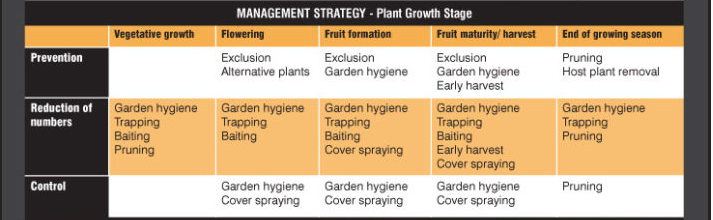
Fruit fly management strategy summary
The following guide can be used in your home garden to help control fruit fly populations.